LOADING_
NaviTo — AI Classifieds for Expats
Avito for expats abroad: a classifieds board that builds itself from Telegram flea-market chats. A Telethon listener + LLM turn slang and photos into strict listings; React PWA with three markets, subscriptions, an AI assistant for sellers and an admin panel. Formerly Love it o.
SPECIFICATIONS
- STATUSactive
- VISIBILITYpublic
- ROLEproduct architect
- ROLEdeveloper
- ROLEautomation designer
- ROLEai pipeline
marketplaceaiautomationapppwa
LOG OUTPUT _
01: The Telegram Flea-Market Paradox
All local expat commerce lives in Telegram: Phuket, Pattaya, Samui, Phangan, Tbilisi, Da Nang — giant flea-market chats everywhere. A chat has perfect liquidity and an instant social graph, but zero taxonomy: nobody can filter messages for "a bike under 30,000 ฿ in Pattaya".
"NaviTo — Avito for our people abroad. A classifieds board for Russian-speaking expats that assembles itself from Telegram chats."
The project started as Love it o and became NaviTo in summer 2025: three countries, a PWA, an AI assistant for sellers, subscriptions and an admin panel. 300+ commits.
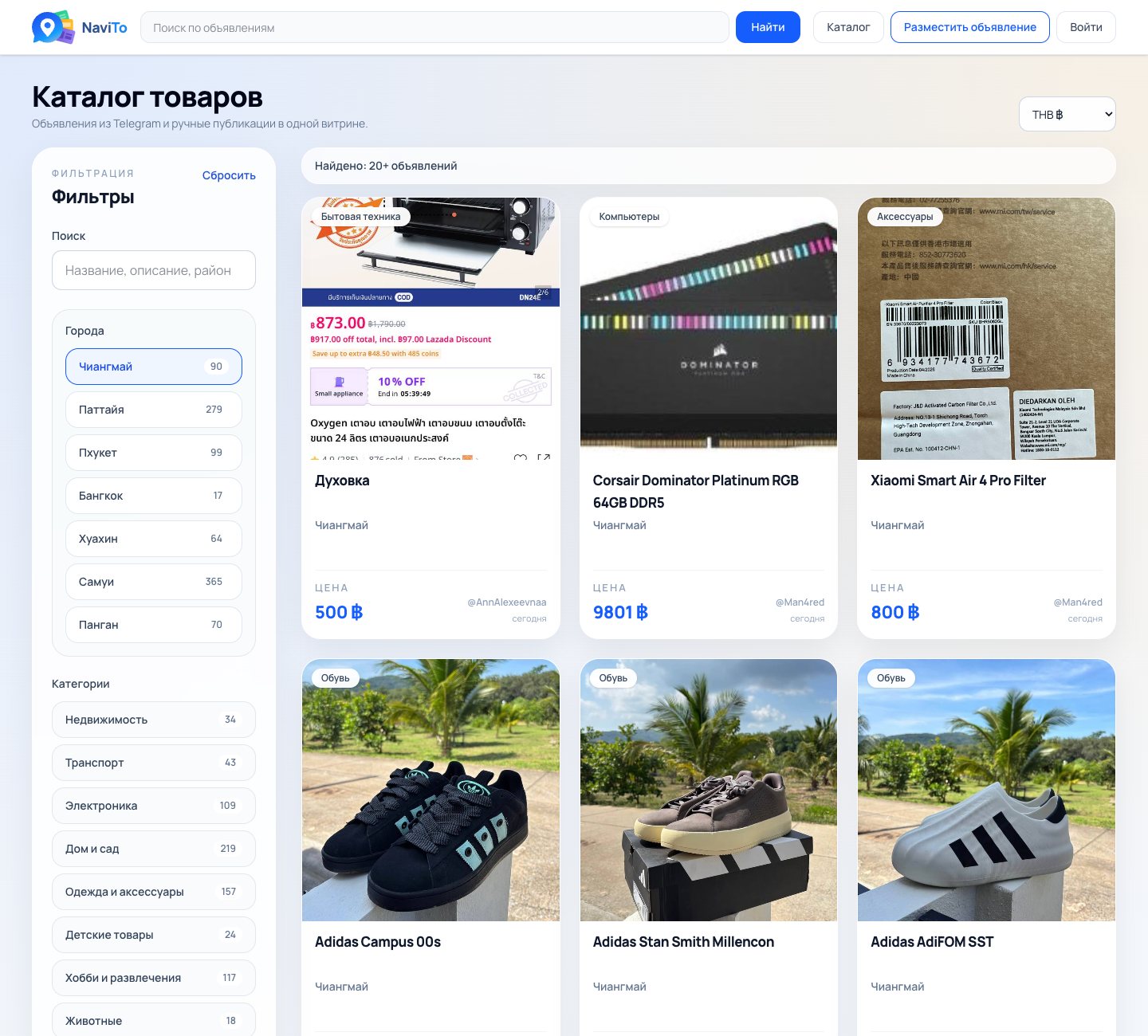
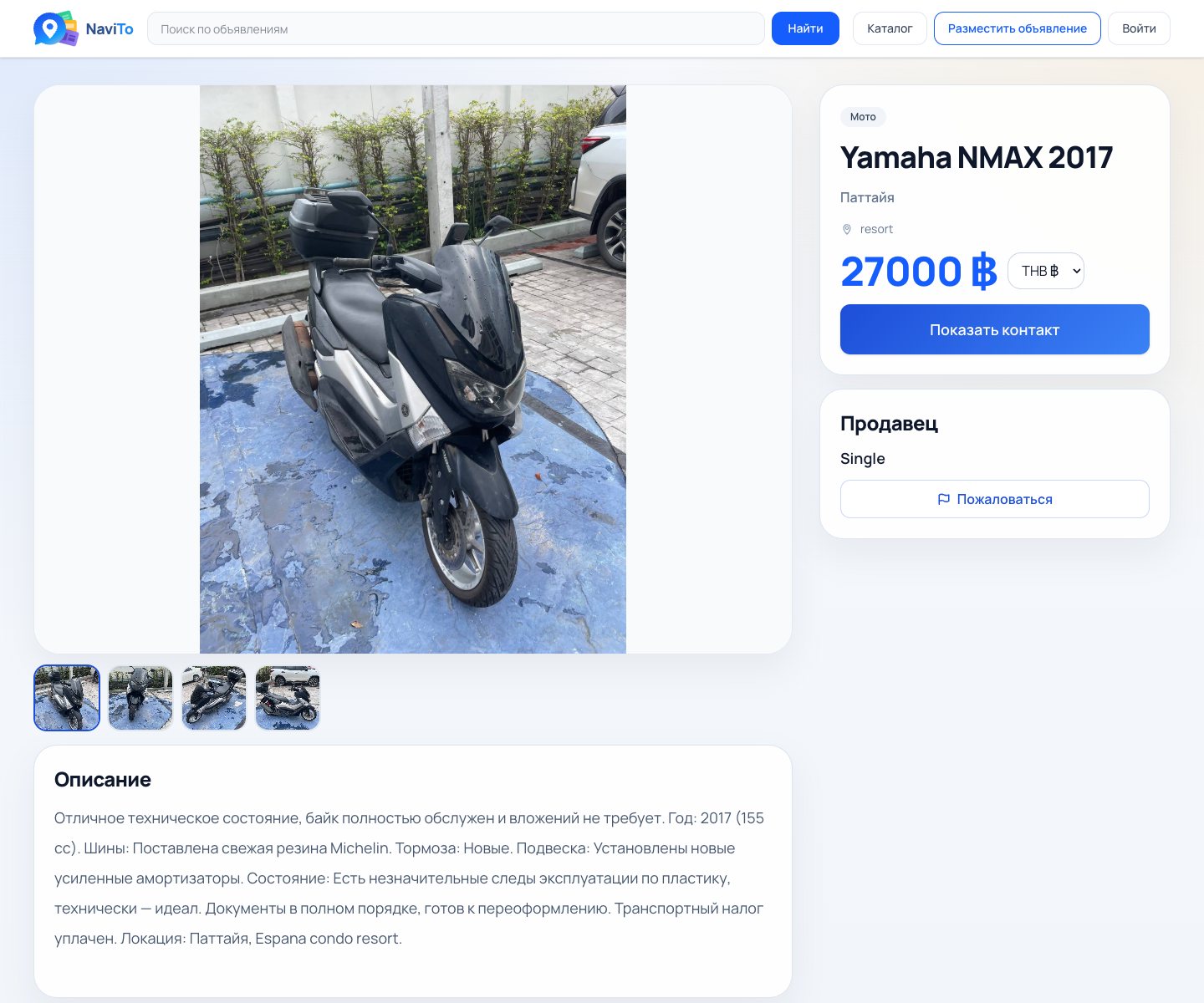
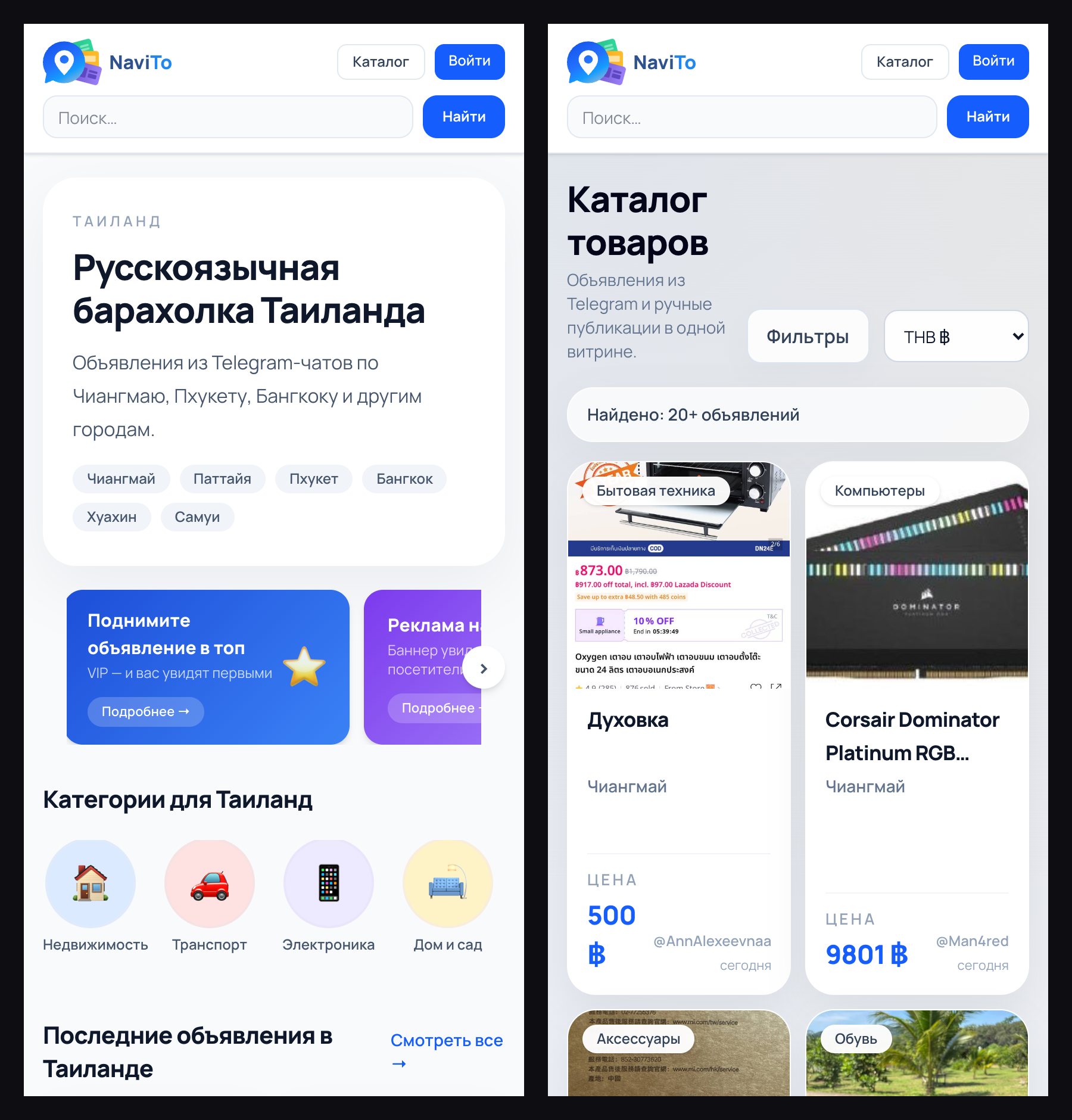
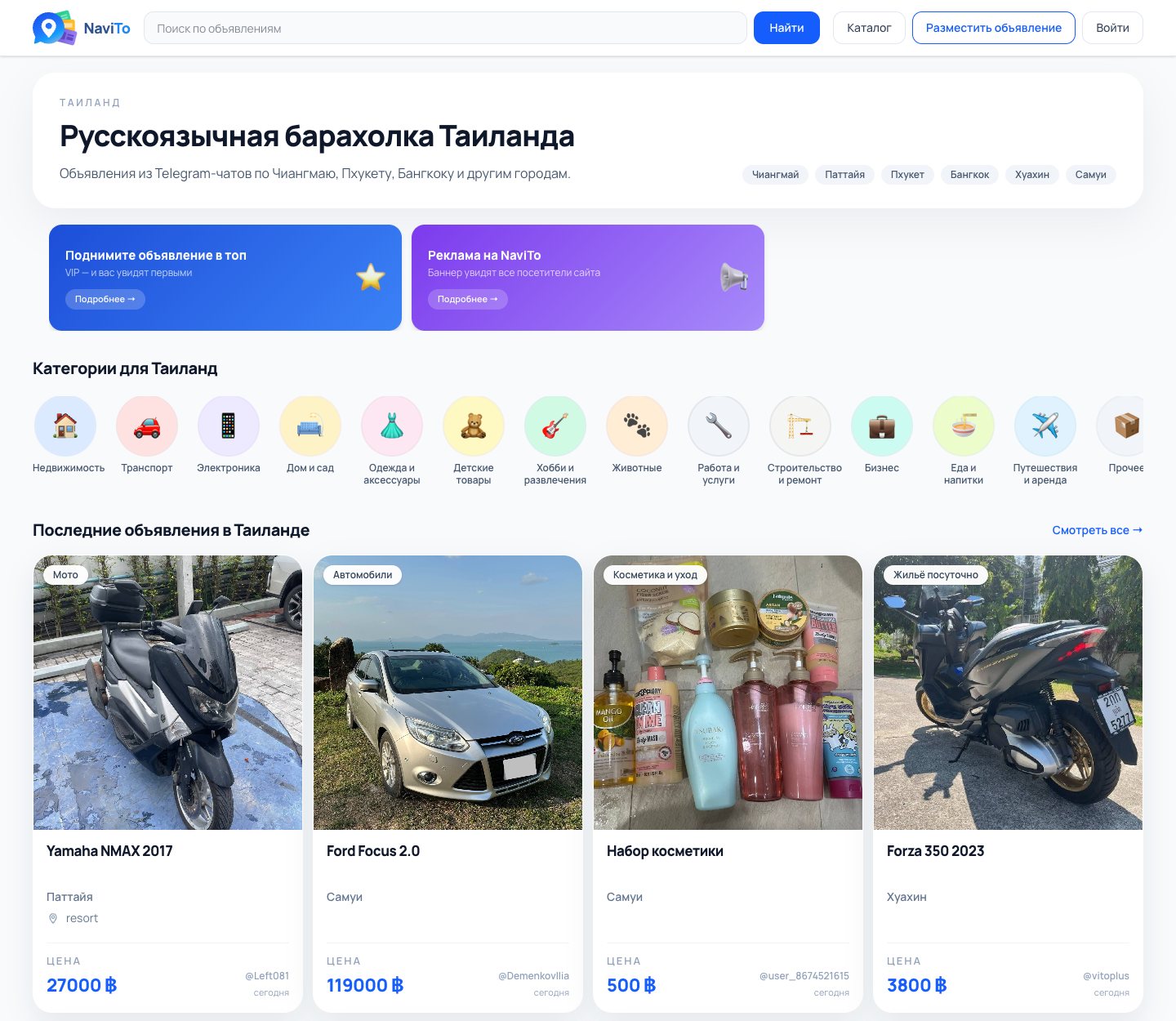
[ SYS_IMAGE_LOAD ] Home: city by IP, VIP listings, categories, fresh cards
02: How It Works
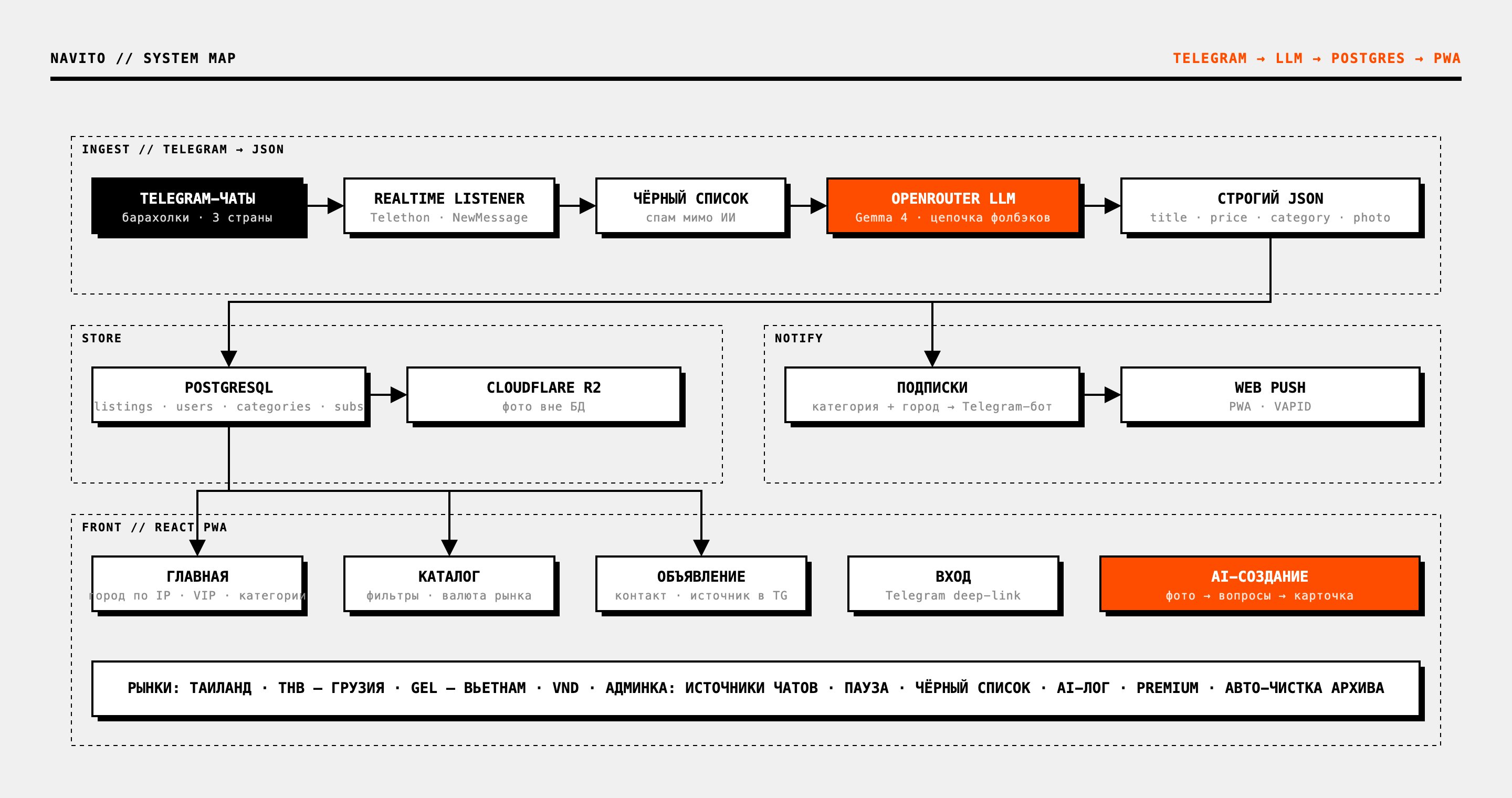
[ SYS_IMAGE_LOAD ] System map: Telegram → LLM → PostgreSQL → PWA
03: AI as an ETL Pipeline
The model here isn't a chatbot but an invisible data-transformation layer doing a data engineer's job in real time.
- A realtime listener on Telethon sits in dozens of flea-market chats and catches every new message with photos.
- A keyword blacklist drops spam before it reaches the model and burns tokens.
- An LLM via OpenRouter (Gemma 4 31B; on failure a fallback chain and a Telegram alert to the admin) receives slang-filled text and photos — and returns strict JSON.
- Deduplication by
telegram_message_id; poorly parsed listings are re-parsed, not duplicated.
The system prompt is engineering in its own right: price slang ("3к" → 3000, "free" → 0), five currencies, multi-item detection by pattern ("Sneakers — 350 / Sandals — 250" → two cards), a "one service = one card" rule, photo-to-item matching by visual content.
ITEM FIELDS:
- title: max 50 chars. Product name + model/year. NEVER start with: Продам/Продаю/Куплю…
- price: number. к/тыс = ×1000 (3к→3000). "бесплатно"/"даром" → 0. Find FINAL price.
- currency: THB | RUB | USD | GEL | VND.
- photo_index: 0-based index of the photo showing THIS item.

MULTI-ITEM DETECTION (read the WHOLE message first):
PATTERN B — "Name — price" lines: "Кроссовки - 350\nСандали - 250" → 2 items
PATTERN C — intro + items: first line with NO price → description for ALL items below
IMPORTANT SERVICE RULE: one service provider describing several packages → ONE item only.