LOADING_
Intimacy — A Transformational Card Game
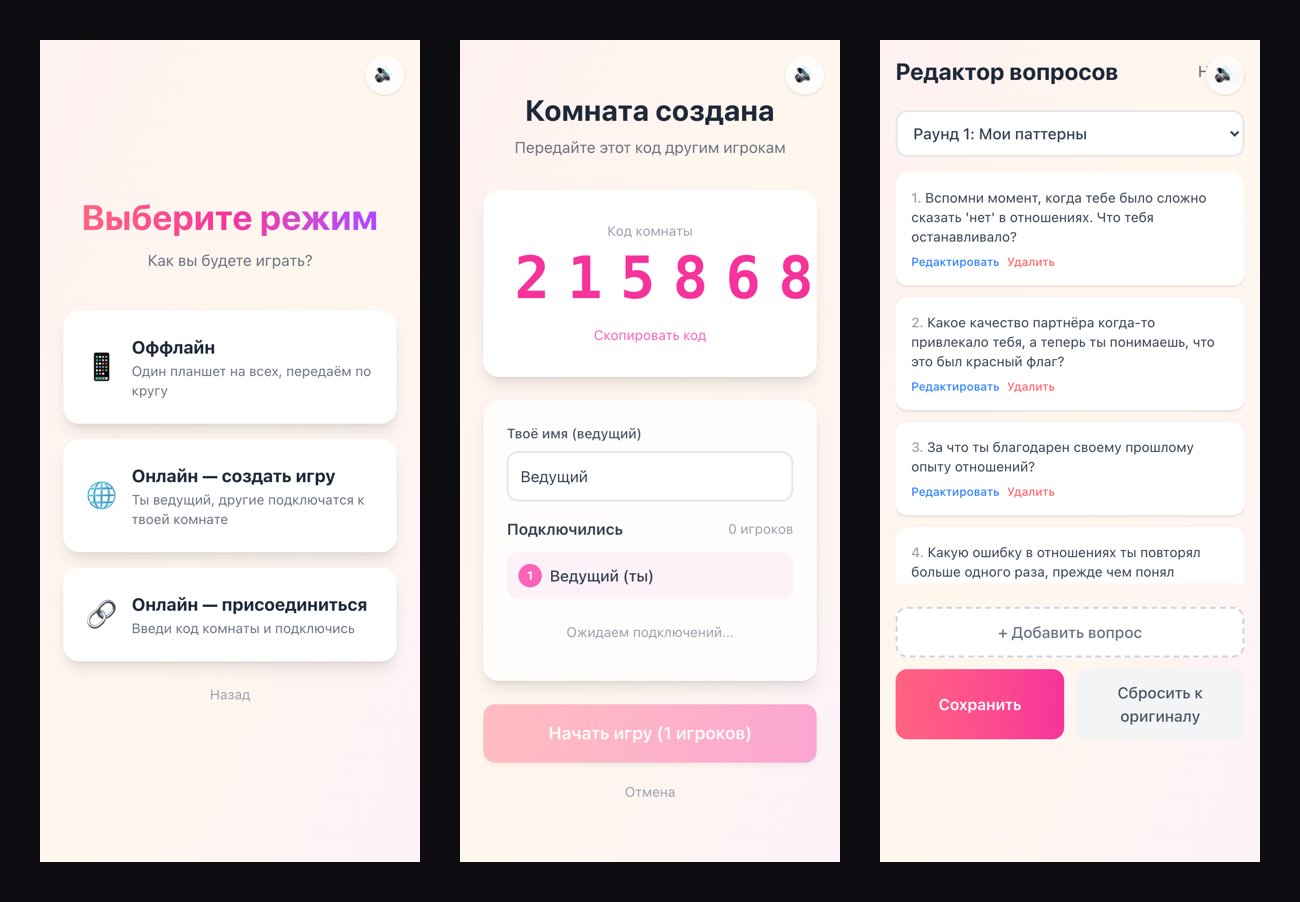
A PWA for honest conversations: 6 rounds, 200+ questions, circle / pairs / reflection mechanics, adjustable candour, offline and serverless online mode by room code. Concept, game script, content, design and front end.
SPECIFICATIONS
- STATUSactive
- VISIBILITYpublic
- ROLEconcept author
- ROLEproduct designer
- ROLEcreator
- ROLEdeveloper
- ROLEcontent
gamepsychologysocialapppwa
LOG OUTPUT _
01: Where It Started
Tabletop "get closer" games are sold as card decks: beautiful but inconvenient. You carry them around, the questions never change, and the depth can't be tuned to the company — what's fine with a close friend is awkward among near-strangers.
I wanted the same experience — a circle of people, a question, the silence before the answer — without the physical box. That's how "Intimacy" appeared: an app that opens from a link on a phone and leads a group through a conversation from the first, light questions to truly vulnerable ones.
"Design not an app with questions but the script of an evening. The interface is the host: it sets the pace, keeps the turn order, goes quiet in time and never pulls attention to itself."
Three design requirements: the screen must not interfere with eye contact; the game must work without a facilitator; depth must be adjustable.
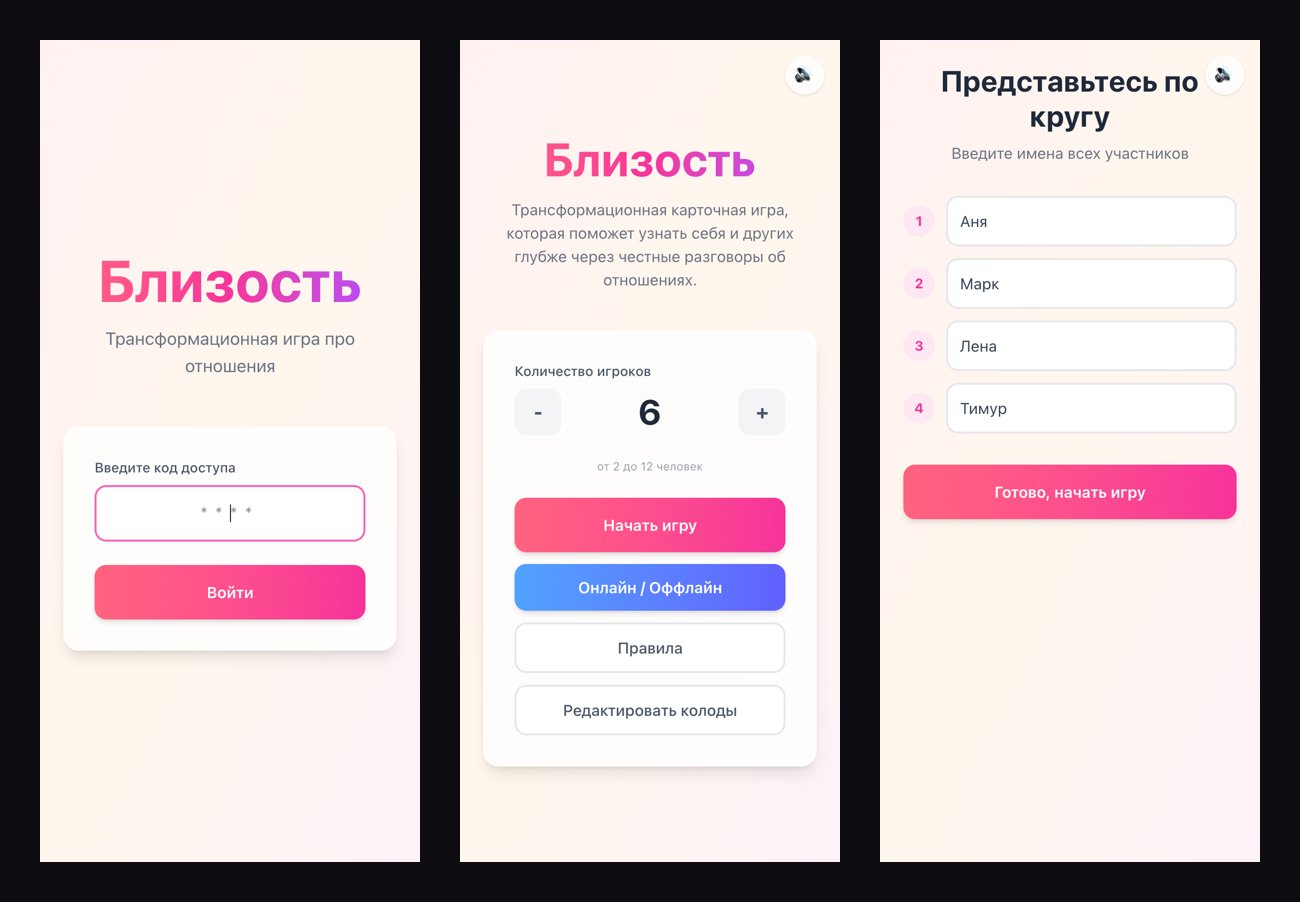
[ SYS_IMAGE_LOAD ] Code entry, start screen, player registration
02: A Six-Round Dramaturgy
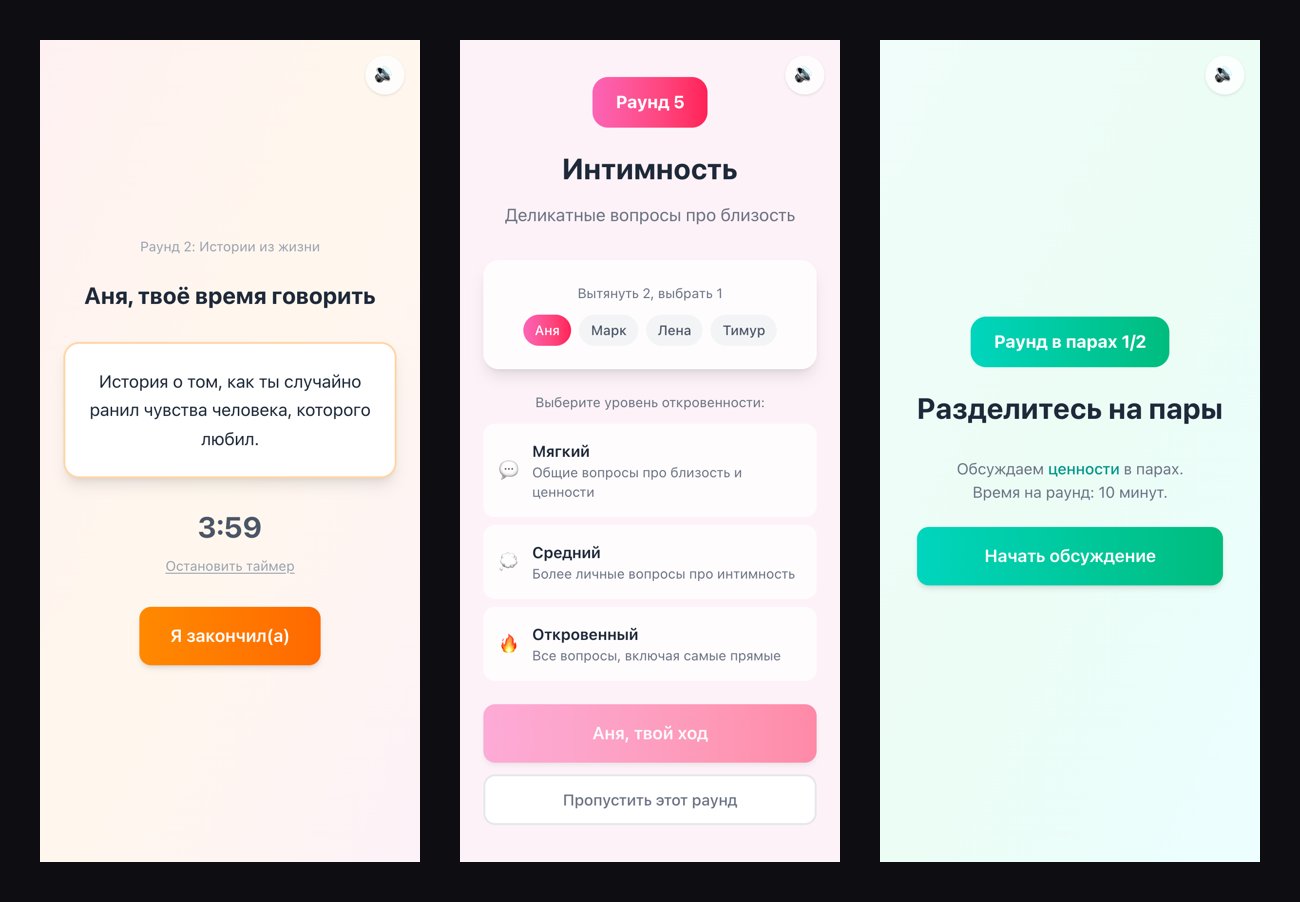
The game is built as a rising arc of closeness. Each round has its colour, mechanic and level of candour:
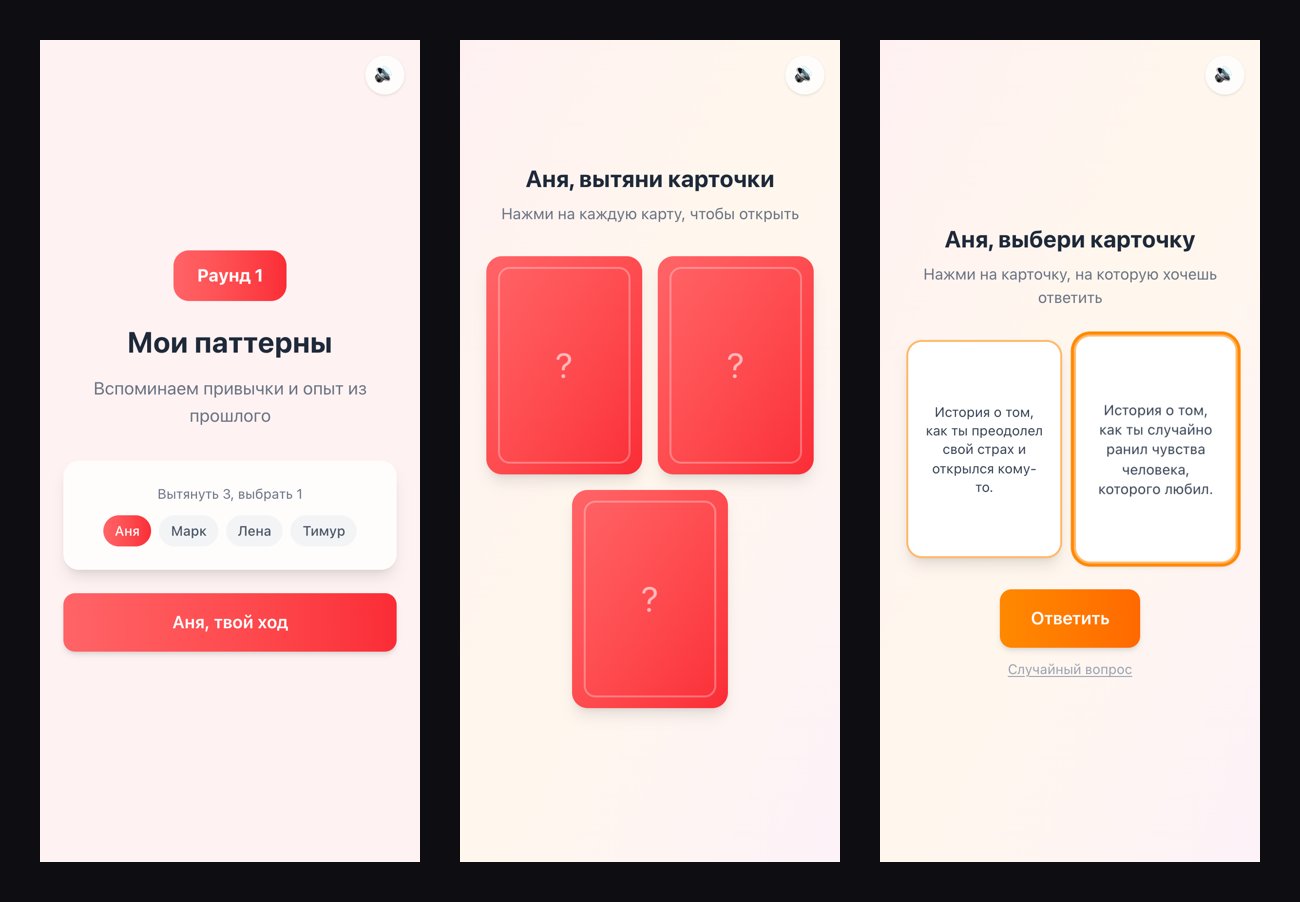
- My patterns — habits and recurring scripts from the past · circle
- Life stories — real stories that shaped us · circle
- Values and fears — what matters to us and what we fear · pairs
- Challenge situations — dilemmas with no right answer · circle
- Intimacy — closeness, vulnerability, trust · circle, skippable
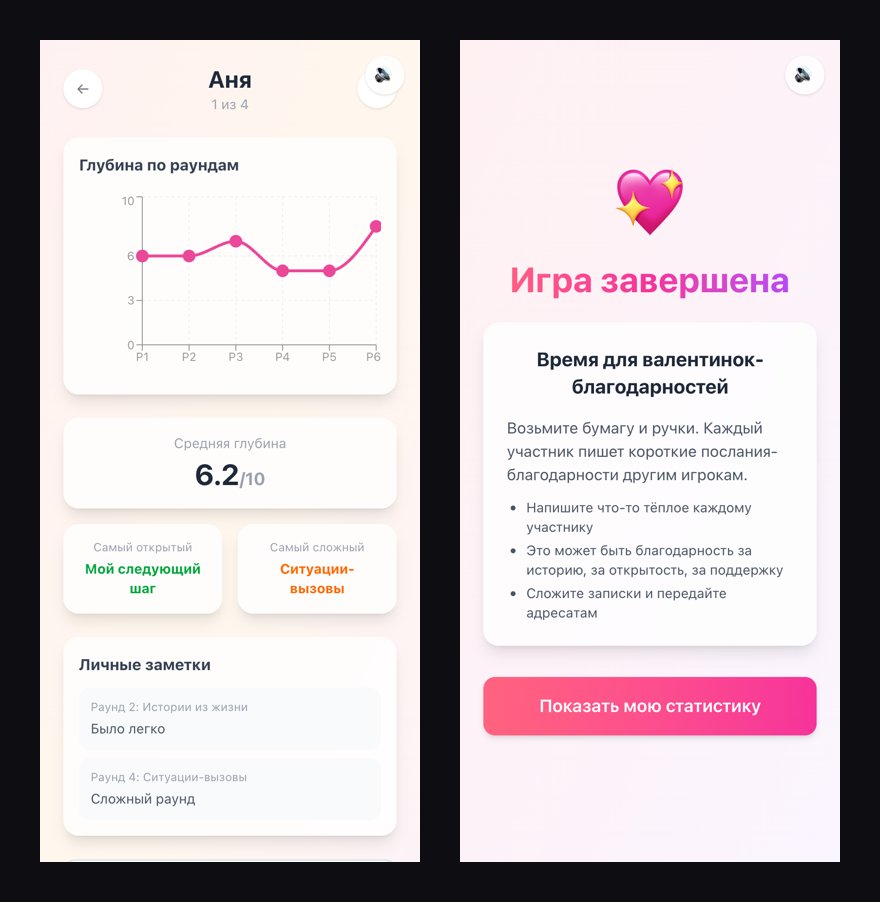
- My next step — intentions and concrete steps · personal reflection
The colour sequence from red to violet works as a progress scale: you can see where you are in the evening without reading a single number.
[ SYS_IMAGE_LOAD ] Round 1: start, draw cards, pick one
03: Three Mechanics Instead of One
Monotony kills these games faster than bad questions. So there are three interaction formats: circle (one answers, everyone listens), pairs (the app splits the group into pairs and reshuffles them between sub-rounds) and (the final round, the answer addressed to yourself).